Short answer: yes. The ASPCA, which runs its own poison-control hotline for pet owners, classifies asparagus fern as toxic to cats. It contains saponins (more precisely, sapogenins), which can cause vomiting, diarrhea, and abdominal pain, mainly when cats eat the berries. The ASPCA rates the overall poisoning risk as low, but any suspected case still deserves a vet visit.
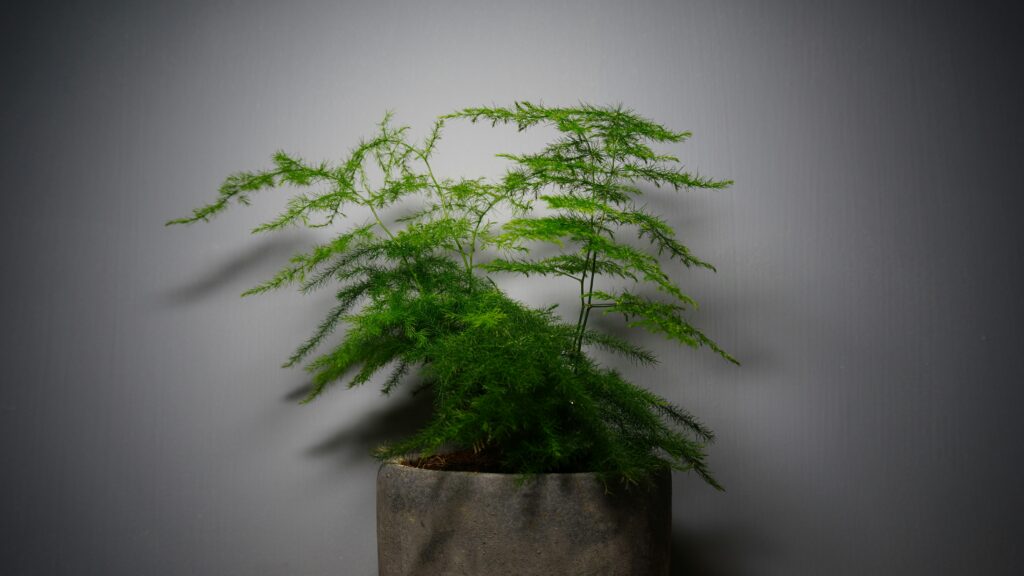
What actually is asparagus fern?
The name is a bit of a trick, honestly: asparagus fern (botanically Asparagus densiflorus, often the ‘Sprengeri’ variety) isn’t a true fern at all. It’s actually related to edible asparagus, in the same family (Asparagaceae) as the lucky bamboo from our last article. It originally comes from southern Africa, and here it’s a popular low-maintenance houseplant and balcony plant thanks to its fine, fern-like fronds.
At our place, asparagus fern was one of Mickey’s favorite excavation sites when she was a kitten, right alongside the lucky bamboo. Loose potting soil and trailing fronds are apparently irresistible to curious kitten paws.
What makes asparagus fern toxic in the first place?
The toxic compounds are sapogenins, a group of saponins the plant produces mainly in the small red berries that appear after flowering. NC State University Extension notes that small amounts also turn up in the leaves, stems, and roots, though the berries carry the highest concentration. Many houseplant asparagus ferns rarely flower or fruit at all, though, so in practice there are often no berries around. That’s probably one reason a lot of cat owners never notice a problem.
What asparagus fern poisoning looks like in cats
According to the ASPCA, cats that eat asparagus fern berries can develop:
- Vomiting
- Diarrhea
- Abdominal pain
Repeated skin contact with the plant’s sap can also trigger allergic dermatitis, which shows up as redness, itching, or small blisters on the skin. NC State Extension backs this up and rates the overall poisoning severity as low.
How dangerous is this, really?
Compared to many other toxic plants for cats, asparagus fern lands on the milder end. Both the ASPCA and NC State University Extension put it in the low-risk category, well below acutely life-threatening plants like lilies. The CliniTox database at the University of Zurich, a major European reference point for animal toxicology, actually goes further and lists Asparagus densiflorus as non-toxic. Their reasoning: saponins have been detected in the plant, but no actual poisoning cases in animals show up in the literature. So the sources don’t fully agree. We’re sticking with the more cautious ASPCA classification here, since it at least names a real risk, even a mild one, and if your cat eats a larger quantity of berries, a vet visit is worth it regardless. Some general advice sites describe far more dramatic outcomes, even severe poisoning, but that doesn’t match what the veterinary sources we’re relying on actually say. It’s not a reason to shrug off a poisoning case. It’s also not a reason to panic. How things play out comes down to the amount eaten and your cat’s individual sensitivity, and when in doubt, call a vet.
The risk everyone forgets: asparagus fern’s thorns
The stems of asparagus fern carry small, thorn-like projections, and that part tends to get lost in the toxicity discussion. They’re not toxic, but they can scratch or irritate the skin of a cat who burrows through the fronds or brushes past them. Mickey doesn’t dig in the soil anymore, but she still sniffs around the fronds sometimes and picks up the odd scratch from the thorns. She’s never actually eaten any of it, thankfully.
What to do if your cat has been nibbling on asparagus fern
- Stay calm, but don’t just wait it out. Watch for vomiting, diarrhea, or unusual behavior over the next several hours.
- Hang onto any berries or plant fragments your cat got into. Having a sample on hand helps your vet assess the situation.
- Keep an eye on irritated skin. Excessive scratching or licking can signal an allergic reaction.
- When in doubt, call your vet or a poison control hotline, especially if several symptoms show up together or don’t clear up on their own.
How I kept Mickey away from the asparagus fern
With the asparagus fern, same as the rest: we didn’t get rid of it, we just moved it. It now lives up out of reach, hanging in a plant sling or sitting out on the balcony instead of on the floor where Mickey could dig freely, and a separate pot of cat grass ended up soaking up a lot of the digging urge that used to go toward the fern. Since Mickey never actually ate the plant, only investigated and sniffed at it, moving it out of easy reach was the most relaxed fix for both of us, not a strict ban.
Non-toxic alternatives to asparagus fern
If you like the fine, fern-like look but want to play it completely safe, bird’s nest fern (Asplenium nidus) and Boston fern (Nephrolepis exaltata) are both listed by the ASPCA as safe for cats, and unlike asparagus fern, they’re actually true ferns. The spider plant (Chlorophytum comosum), which we already mentioned in the lucky bamboo article, is another easy, non-toxic option with a similar trailing growth habit.
So, should you worry?
Asparagus fern is toxic to cats, but in practice it tends to stay fairly mild unless your cat eats a real quantity of berries. Eating was never really our problem with Mickey. Digging in the soil and the odd scratch from the thorns, that was the actual issue. Still, it’s worth keeping the plant out of reach, and when in doubt, call the vet once too often rather than not at all.
This article doesn’t replace veterinary advice. If you suspect poisoning, contact your vet or a nearby animal hospital right away.