Short answer: yes, lucky bamboo is toxic to cats. It contains saponins, and those can trigger vomiting, heavy drooling, and a lost appetite. The poisoning is rarely life-threatening, but it still deserves a call to your vet.
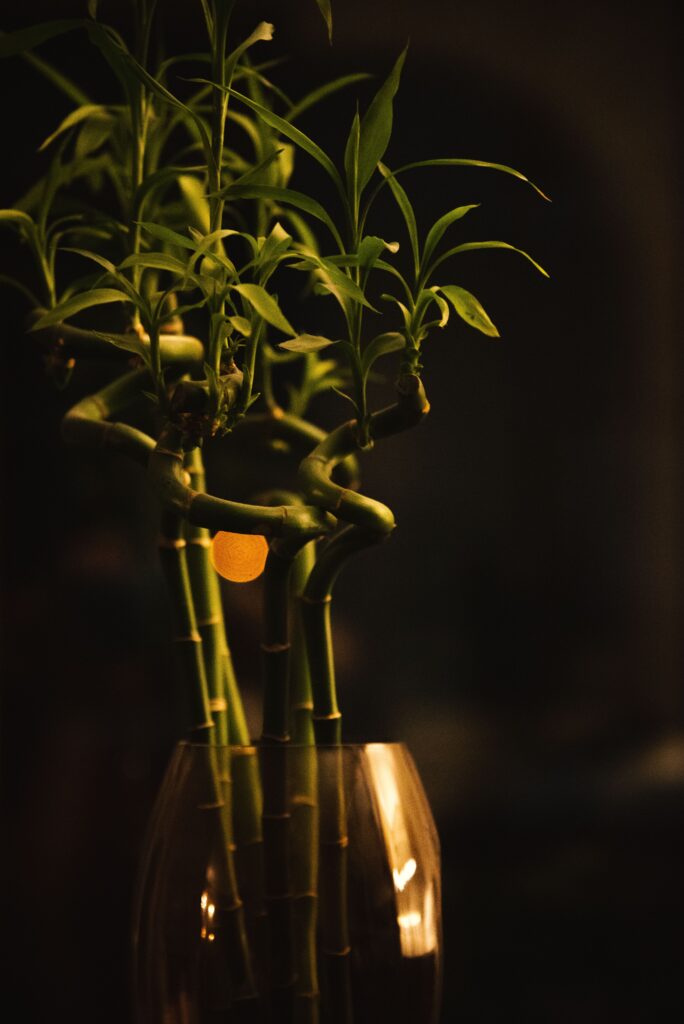
What lucky bamboo actually is
The name is a bit misleading: lucky bamboo (botanically Dracaena sanderiana) isn’t a true bamboo at all. Real bamboo belongs to the grass family (Poaceae) and is harmless to cats. Lucky bamboo belongs instead to the genus Dracaena, in the asparagus family (Asparagaceae). That’s the genus the ASPCA lists among its toxic plants for cats and dogs. The ASPCA is the major US animal welfare group known for its poison-control hotline and plant toxicity database.
At our house, lucky bamboo was one of the first plants my cat Mickey ever got her paws on as a kitten. She dug in it constantly. Along with the asparagus fern, it became her favorite excavation project. She never actually ate any of it, thankfully, but that’s exactly where my own research started: did I need to worry, or was keeping an eye on her enough?
Why is lucky bamboo toxic to cats?
The toxic compounds in Dracaena species are saponins, plant chemicals many species produce as a defense against being eaten. Cats tolerate them poorly in larger amounts, and the main effect is irritation of the gastrointestinal tract. Exactly how concentrated they are varies by plant part and hasn’t been precisely measured, so there’s no reliable way to predict how a given cat will react to a given amount. The CliniTox database, run by the Institute of Veterinary Pharmacology and Toxicology at the University of Zurich, backs this up for the closely related species Dracaena fragrans: it’s classified there as mildly toxic, with the whole plant considered affected.
Symptoms of lucky bamboo poisoning in cats
According to the ASPCA, eating lucky bamboo (or Dracaena species generally) can cause the following symptoms in cats:
- Vomiting, occasionally with blood
- Increased drooling
- Loss of appetite
- Lethargy and low energy
- Dilated pupils (this symptom is specifically noted in cats)
Symptoms typically appear within a few hours of ingestion.
How dangerous is this, really?
The good news first: lucky bamboo poisoning in cats usually isn’t life-threatening. The ASPCA classifies Dracaena species as toxic, but not in the highest-risk category the way lilies are. Lilies can be acutely life-threatening to cats even in tiny amounts. How strongly an individual cat reacts depends on how much she ate and her own sensitivity, and that’s impossible to predict in advance. A curious nibble is a different story from eating a real quantity, which is exactly why a call to your vet beats just waiting it out if you’re unsure.
Why do you sometimes read online that lucky bamboo is harmless?
Part of the confusion: lucky bamboo is often marketed as low-maintenance and easy-going, which some people mistake for non-toxic. Brief contact with a paw or fur is usually harmless too. The real risk only kicks in once plant material is actually eaten. That’s probably why plenty of cat owners with lucky bamboo at home have never had a bad experience, even though the plant is officially classified as toxic.
What to do if your cat has been nibbling on lucky bamboo
- Don’t panic, but don’t just wait and see either. Watch your cat closely over the next few hours.
- Skip the home remedies. Never try to induce vomiting yourself; in cats, that can do more harm than good.
- Call your vet or a poison control hotline. If you can, keep a piece of the plant handy so the species can be identified with certainty.
- Watch for symptoms. Vomiting, diarrhea, heavy drooling, or lethargy are reasons to get seen promptly, even if you’re not sure your cat actually ate anything.
Keeping Mickey out of the lucky bamboo
Throwing it out wasn’t an option for us, so we rearranged instead. The lucky bamboo now sits somewhere hard for Mickey to reach, instead of standing at floor level where she used to dig. Since the real behavior was digging in the soil rather than deliberately eating the plant, a pot of cat grass gave her an approved outlet for digging and nibbling. Supervision has worked better than an outright ban, too. A cat kept fully away from something is usually harder to manage than one given a better option right next to it.
An often-overlooked risk: the water in the vase
Lucky bamboo is usually sold not in soil but as cut stems standing in a glass of water, and that brings an extra risk many cat owners don’t think about: the water itself. Cats love drinking from unusual containers. If liquid fertilizer for lucky bamboo has been added to the water, extra substances end up in your cat’s drinking water that have no business being there, and even without fertilizer, the water can accumulate plant sap and bacteria over time. If you’re keeping lucky bamboo in water culture, put the container somewhere your cat can’t drink from, and skip liquid fertilizer entirely, or dose it very sparingly if you do use it.
Non-toxic alternatives to lucky bamboo
If you’d rather play it safe and replace lucky bamboo altogether, there are non-toxic options with a similarly modern, graphic look that the ASPCA lists as safe for cats. The spider plant (Chlorophytum comosum) is a great example, and plenty of cats actively love it. We cover exactly which houseplants are genuinely safe in more detail in a dedicated article.
The takeaway
Lucky bamboo is toxic to cats, but the risk is manageable once you know about it: get your cat checked by a vet promptly if you’re ever unsure. In our experience, curious investigating without actual eating has been by far the most common behavior. That’s not a reason to panic, but it’s not a reason to relax completely either. I still keep a close eye on Mickey whenever a new plant enters the apartment.
This article doesn’t replace veterinary advice. If symptoms persist or get severe, contact your vet or a nearby animal hospital.